Which AI Inference Platform Is Most Reliable? A Practical Guide for Developers
When choosing infrastructure for an AI application, which ai inference platform is most reliable is not always as simple as picking the provider with the highest uptime number. A production AI system can fail because of an unavailable model, unexpected latency spikes, rate limits, provider outages, or a broken integration—even when the underlying model itself is highly capable.
For developers and product teams, reliable AI inference is therefore about more than uptime. It means having consistent performance, resilient infrastructure, provider redundancy, effective fallback mechanisms, and enough visibility to understand what is happening when a request fails.
This guide explains what makes an AI inference platform reliable, how to evaluate different approaches, and why a multi-provider architecture can be more resilient than depending on a single AI provider.
What Is an AI Inference Platform?
An AI inference platform provides the infrastructure needed to send requests to AI models and receive generated results. Depending on the platform, this can include access to large language models, vision models, image generation models, video models, speech models, or embedding models.
It is useful to distinguish several layers:
- AI model: The underlying model, such as an LLM or image generation model.
- AI API: The interface developers use to send requests to that model.
- Inference platform: The infrastructure responsible for serving models and processing inference requests.
- AI API gateway: A layer that can connect applications to multiple model providers and manage routing, authentication, monitoring, and other infrastructure concerns.
This distinction matters when evaluating reliability. A highly reliable model provider can still become a single point of failure if your application depends entirely on one API endpoint.
What Makes an AI Inference Platform Reliable?
There is no single metric that defines reliability. For production applications, it is better to evaluate an inference platform across several dimensions.
1. High Availability and Uptime
Availability is the most obvious starting point.
If an AI API is frequently unavailable, even the best model will not be useful for a production application. However, published uptime percentages should not be the only thing developers consider.
Look at:
- Historical service availability
- API error rates
- Regional availability
- Incident response
- Rate-limit behavior
- Model-specific availability
- Recovery time after an outage
A platform may be highly available overall while a particular model or endpoint experiences intermittent problems. Your application architecture needs to account for that possibility.
2. Consistent Latency
Reliability also means predictable response times.
For an AI-powered chatbot, coding assistant, customer support application, or agent workflow, an occasional extremely slow request can be almost as disruptive as a failed request.
When testing an AI inference platform, measure more than average latency. Track:
- Time to first token
- Total response time
- Latency variation
- Timeout frequency
- Performance during high traffic
- Performance across different models
For production workloads, consistency is often more valuable than an impressive average benchmark.
3. Automatic Retries
Temporary failures happen.
A network issue, overloaded endpoint, or transient provider error does not necessarily mean the request should immediately fail.
A reliable inference layer can use controlled retry mechanisms to handle certain temporary errors. The important word is controlled: indiscriminate retries can increase traffic and make an outage worse.
Good retry logic should consider:
- Which errors are retryable
- How many times to retry
- Backoff intervals
- Request idempotency
- Timeout limits
For teams building their own infrastructure, implementing and maintaining this logic can become another engineering responsibility.
4. Failover and Fallback
This is where the difference between a single-provider setup and a multi-provider architecture becomes especially important.
Imagine your application normally sends requests to Provider A:
Application
     ↓
Provider A
     ↓
Successful response
If Provider A becomes unavailable, the request may fail:
Application
     ↓
Provider A
     ↓
Unavailable
     ↓
Error
A multi-provider inference layer can introduce another path:
Application
     ↓
Inference Gateway
     ↓
Provider A ── unavailable
     ↓
Fallback
     ↓
Provider B
     ↓
Successful response
This does not guarantee that every request will succeed. However, it reduces the risk of making one provider a single point of failure.
5. Multi-Provider Access
Provider redundancy is one of the strongest ways to improve resilience.
Modern AI applications may use models from OpenAI, Anthropic, Google, DeepSeek, and other providers depending on the workload. Maintaining each integration independently, however, creates additional code and operational complexity.
A unified API layer can reduce this complexity by standardizing access to multiple models.
Instead of building:
Application → Provider A
Application → Provider B
Application → Provider C
Application → Provider D
developers can build:
Application
      ↓
Unified AI API
      ↓
Multiple Providers
The benefit is not simply having more models to choose from. It is having more options when availability, latency, cost, or model capacity changes.
6. Monitoring and Observability
You cannot improve reliability if you cannot see where failures occur.
A production AI inference platform should provide visibility into areas such as:
- Request volume
- Error rates
- Latency
- Token usage
- Model usage
- Provider performance
- Cost trends
- Failed requests
Monitoring is especially important in multi-model environments because a problem may originate from a specific model or provider rather than the gateway itself.
7. Predictable Cost and Capacity
Cost is not normally considered a reliability metric, but unpredictable infrastructure costs can become an operational problem.
For example, an application that suddenly routes more traffic to an expensive model can experience an unexpected increase in spending. Budget controls, usage monitoring, and model-level cost visibility can help prevent this from becoming a production incident.
For teams comparing inference platforms, reliability should therefore include both technical resilience and operational control.
Single-Provider vs. Multi-Provider AI Inference
One of the most important decisions is whether your application should rely on a single AI provider or use a multi-provider inference architecture.
| Factor | Single-Provider Approach | Multi-Provider Approach |
|---|---|---|
| Initial setup | Usually simpler | Requires an additional gateway or abstraction layer |
| Model selection | Limited to one ecosystem | Broad selection across providers |
| Provider redundancy | Low | Higher |
| Failover options | Usually requires custom logic | Can be handled at the gateway layer |
| Model switching | May require integration changes | Easier with a unified API |
| Vendor lock-in | Higher | Lower |
| Billing | Provider-specific | Can be consolidated |
| Monitoring | Often provider-specific | Can be centralized |
| Best suited for | Simple or provider-specific applications | Multi-model and production workloads |
A single-provider architecture is not inherently unreliable. If an application only needs one model and the provider meets its availability and performance requirements, a direct API integration may be perfectly reasonable.
The problem appears when that single provider becomes critical to the entire application.
For a growing AI product, having another model or provider available can provide a valuable layer of resilience.
Which AI Inference Platform Is Most Reliable?
So, which ai inference platform is most reliable?
There is no universal winner for every workload.
If your priority is direct access to a particular model, the model provider’s official API may be the most straightforward option. If your priority is enterprise cloud infrastructure, a major cloud platform may make more sense. If your application needs access to many models while reducing dependency on any single provider, a multi-provider AI API gateway can offer a stronger architecture.
The key question is therefore not:
“Which provider will never fail?”
No provider can realistically promise that.
A better question is:
“What happens to my application when the provider I normally use becomes unavailable?”
That question shifts the focus from provider reputation to system resilience.
Reliability Framework for AI Inference Platforms
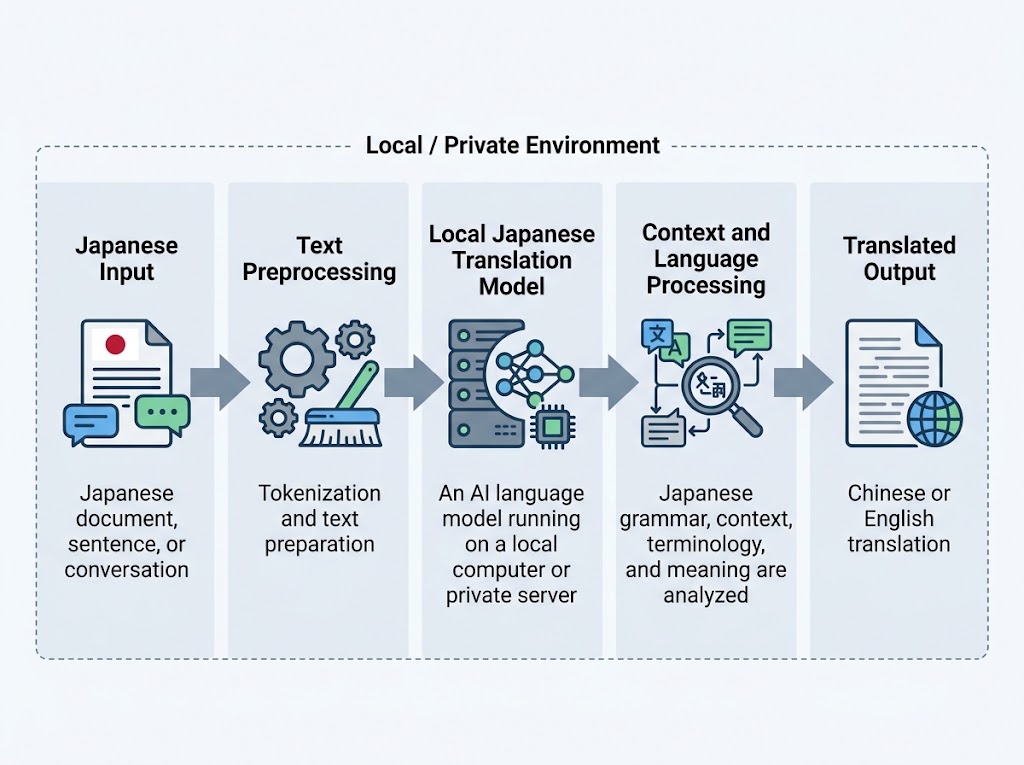
A practical way to evaluate an AI inference platform is to use a reliability framework built around five layers:
A platform that performs well across all five areas is generally better positioned for production use than one that only offers access to a powerful model.
How TokenHub Approaches AI Inference Reliability
This is where a unified AI API gateway can become useful.
TokenHub combines a model marketplace, API gateway, and shared billing layer so developers can access multiple AI models without building a separate integration for every provider. Its platform supports an OpenAI-compatible API, while its documentation also provides compatible interfaces for other common workflows.
More importantly for reliability, TokenHub describes its infrastructure as providing automatic retries, intelligent fallback, and multi-region deployment. Its fallback mechanism is designed to switch to another provider when the primary provider is unavailable.
That creates a different architecture from simply choosing one “reliable” provider:
                         YOUR APPLICATION
                                │
                                ▼
                     ┌────────────────────┐
                     │      TokenHub       │
                     │ Unified API Gateway │
                     └─────────┬──────────┘
                               │
              ┌────────────────┼────────────────┐
              ▼                ▼                ▼
          Provider A       Provider B       Provider C
           GPT models      Claude models     Gemini models
              │                │                │
              └────────────────┼────────────────┘
                               │
                    Routing / Retry / Fallback
                               │
                               ▼
                       Reliable Response
The advantage is architectural flexibility. Instead of hard-coding your application around one model provider, you can change the model through the API request while keeping the integration layer consistent. TokenHub states that supported models can be accessed through one API key and endpoint, with model selection handled through the request.
This approach can also be useful when different models are better suited to different workloads. A development team might use one model for complex reasoning, another for high-volume requests, and another for image or video generation without maintaining completely separate provider integrations.
How to Choose a Reliable AI Inference Platform
Before committing to an AI inference platform, run your own evaluation rather than relying entirely on marketing claims.
Test availability
Check whether the models and endpoints you need are consistently accessible.
Measure real-world latency
Run representative workloads and record latency distributions rather than relying only on advertised averages.
Test failure scenarios
Find out what happens when a provider returns errors, times out, or reaches a rate limit.
Look for fallback capabilities
Determine whether requests can be redirected to another model or provider when the primary route fails.
Evaluate provider diversity
A gateway connected to many providers can provide more redundancy than one that only aggregates models from a single ecosystem.
Check monitoring and cost controls
Make sure you can see usage, errors, latency, and spending before moving significant production traffic.
Test your actual workload
Benchmarks are useful, but your own application is the final test. A model that performs well on public benchmarks may behave differently with your prompts, tools, context lengths, and agent workflows.
Why Multi-Provider Reliability Matters for Production AI
As AI applications become more sophisticated, they increasingly depend on several models rather than one.
A single application might combine:
- A reasoning model
- A coding model
- A vision model
- An image generation model
- A speech model
- An agent model
Building each integration separately can increase engineering and maintenance costs. It can also make the application more vulnerable to provider-specific outages.
A multi-provider inference layer provides another option: keep the application connected to a consistent API while allowing the underlying model or provider to change.
That is particularly valuable for startups and B2B SaaS teams that need to experiment quickly. TokenHub positions its unified API specifically for developers and B2B teams that need to connect LLM, image, and video models without maintaining separate provider-specific integrations.
Final Verdict: Reliability Is an Architecture Decision
So, which ai inference platform is most reliable?
The answer depends on what you mean by reliable. If reliability means the uptime of one specific model API, the best choice may simply be the provider that meets your application’s requirements. But if reliability means keeping an AI product operational when models, providers, or endpoints experience problems, then the architecture matters just as much as the provider.
A reliable AI inference strategy should combine: Availability + consistent performance + retries + failover + provider redundancy + monitoring + cost controls. For teams that want to minimize single-provider dependency, a multi-provider AI API gateway can provide an additional reliability layer between the application and individual model providers.
TokenHub takes this approach by combining unified API access with model aggregation, routing, automatic retries, intelligent fallback, monitoring, and shared billing.
Ultimately, the most reliable AI inference platform is not necessarily the one with the most impressive model or the highest advertised uptime. It is the one that gives your application the best ability to keep working when something inevitably goes wrong.